Prescription Estriol Cream vs OTC: What Works for Menopause?
As we navigate the changes that come with perimenopause and menopause, many of us notice our skin doesn't feel as firm, hydrated, or resilient as it once did. This isn't just a cosmetic change; it's a biological one. Estrogen, a key hormone for skin health, plays a vital role in producing collagen, maintaining elasticity, and ensuring proper hydration. As its levels decline, the skin can become thinner, drier, and more prone to fine lines.
While the market is flooded with products promising to turn back the clock, the real question is what truly works. Many women find themselves weighing the options between over-the-counter (OTC) creams and prescription-strength solutions. At Musely, we believe in providing science-backed treatments that deliver real results. Let's explore the differences to help you make an informed choice for your skin's health during menopause.
Understanding Estrogen and Its Role in Skin Health
Your body produces three main types of estrogen: estrone (E1), estradiol (E2), and estriol (E3). While estradiol is the most potent form before menopause, estriol (E3) is a gentler estrogen that is particularly beneficial for skincare when applied topically.
Estrogen receptors are present throughout your skin. When activated, they help regulate skin function, promoting thickness and moisture. The decline in estrogen during menopause slows these processes, leading to common concerns like dryness and loss of firmness. Replenishing this hormone locally with a topical cream can directly address these changes at their source. This is why a guide to estrogen facial cream can be so helpful for understanding this targeted approach.
Prescription Estrogen Creams: The Gold Standard
When it comes to potency and efficacy, prescription treatments stand in a class of their own. Unlike one-size-fits-all OTC products, prescription formulas are prescribed by a medical professional for your specific needs and are formulated to a guaranteed concentration for reliable results.
At Musely, we've treated over 1 million patients and counting, because we don't chase trends—we solve real problems. Our treatments are formulated by U.S. dermatologists and compounded fresh for you.
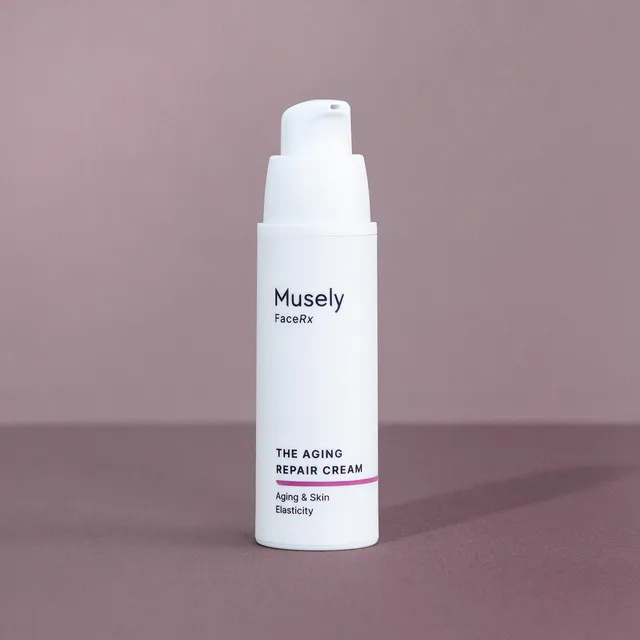
For Facial Aging: The Aging Repair Cream
To combat the visible signs of hormonal aging on the face, we developed The Aging Repair Cream. This groundbreaking prescription cream is expertly formulated with:
Estriol (0.3%): A bioidentical estrogen that helps restore skin elasticity and thickness.
Vitamin C (1%): A powerful antioxidant that brightens the skin and supports collagen.
Hyaluronic Acid (0.5%): A hydration powerhouse that attracts moisture to plump the skin.
This potent combination works to improve skin texture, reduce the appearance of wrinkles, and restore a youthful glow. It offers a targeted way to address the root cause of menopausal skin changes.
For Vaginal Dryness and Discomfort
Just as facial skin changes, the tissues of the vulva and vagina are also affected by estrogen loss, a condition known as genitourinary syndrome of menopause (GSM) or vaginal atrophy. This can cause dryness, itching, and discomfort.
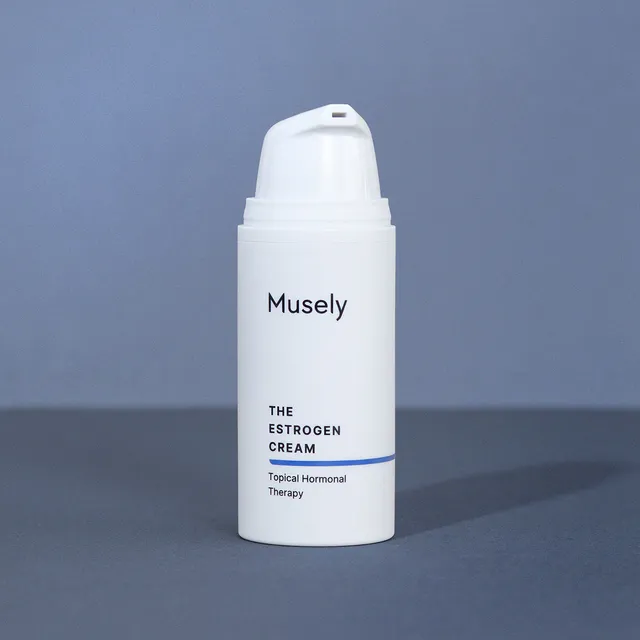
For these specific concerns, localized low-dose vaginal estrogen cream is a highly impactful treatment. Studies show that estriol vaginal creams and gels can significantly relieve symptoms of vaginal atrophy [1] and may also help prevent recurrent urinary tract infections (UTIs) in postmenopausal women [2]. Research has demonstrated that even ultra-low doses of estriol gel can be a good option for this purpose [3]. These treatments work by restoring moisture and thickness directly to the vaginal lining [4].
Over-the-Counter (OTC) "Estrogen" Creams
OTC creams found on drugstore shelves typically do not contain actual estrogen. Instead, they often use phytoestrogens (plant-based compounds that mimic estrogen) or other moisturizing ingredients. While they can provide temporary hydration, they have several key limitations:
Lower Potency: Phytoestrogens are significantly weaker than bioidentical hormones and may not be strong enough to produce meaningful structural changes in the skin.
Lack of Regulation: These products are generally regulated as cosmetics, not drugs, meaning their efficacy claims don't undergo the same rigorous testing as prescription treatments.
Variable Results: Without a standardized, guaranteed concentration of active ingredients, results can be inconsistent and unpredictable.
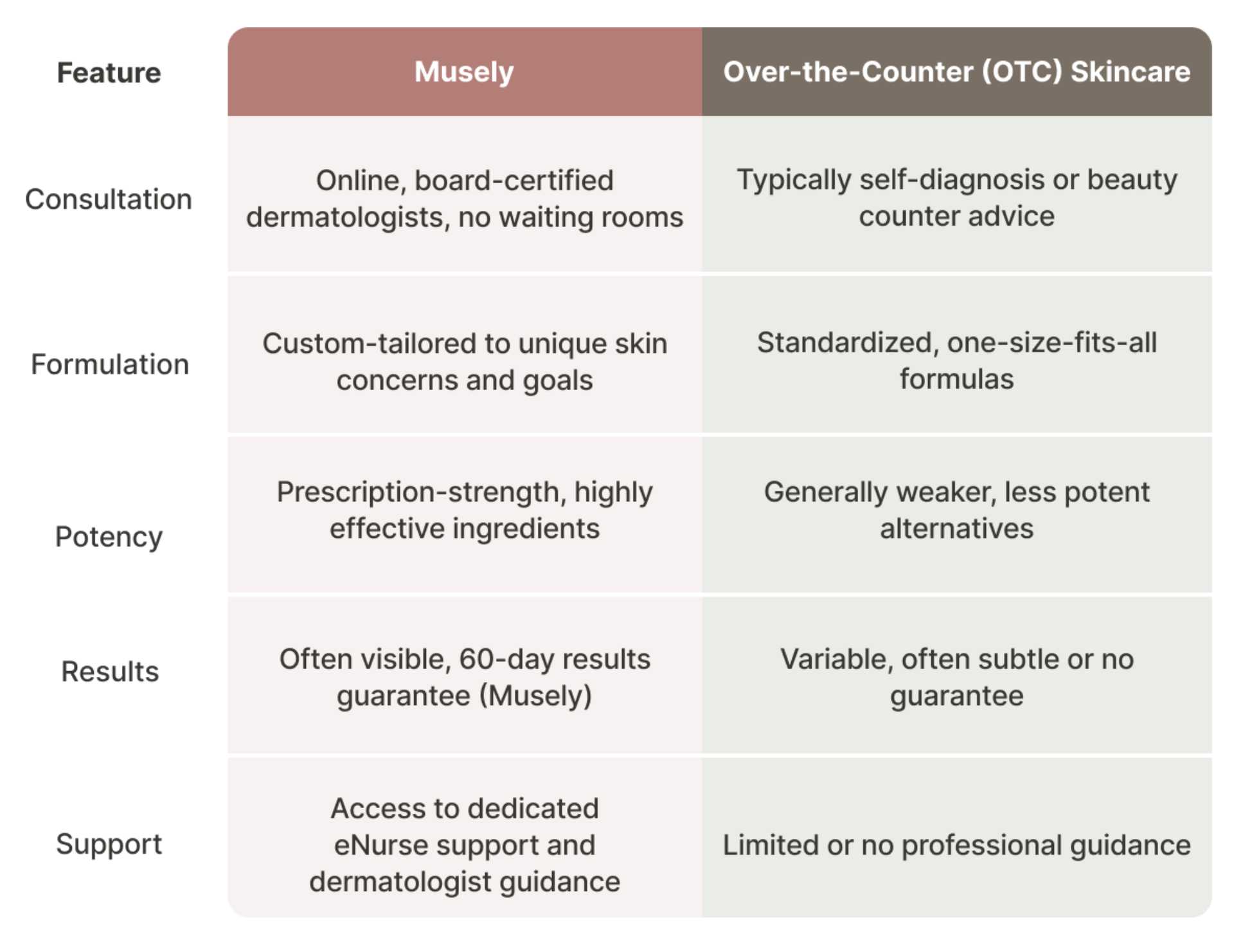
Prescription vs. OTC: A Clear Comparison
Choosing between a prescription and an OTC product comes down to your goals. Are you looking for temporary relief or a long-term, science-backed solution?
Safety and Making an Informed Choice
Prescription estriol cream for the face is designed to work locally on the skin with minimal systemic absorption, making it a great option for many women. However, it's essential to use it under medical guidance. A potential side effect can be changes in pigmentation or melasma, so daily use of a broad-spectrum sunscreen is crucial.
Your doctor will evaluate your health history to ensure it's the right choice for you. For instance, women with a history of estrogen-dependent cancers are typically advised to avoid hormone-based therapies unless cleared by their oncologist.
With OTC products, the long-term safety and efficacy profiles are less understood. Because they aren't prescribed, you miss out on the crucial step of a medical consultation to ensure the treatment is appropriate for you.
The Takeaway
While OTC creams can offer some surface-level moisture, they can't match the targeted, restorative power of a prescription estriol cream. For women seeking to address the fundamental skin changes caused by menopausal estrogen decline, a prescription-strength solution is the most impactful path forward. It provides a potent, regulated, and personalized approach to help you regain skin that looks and feels healthy, firm, and radiant.
At Musely, we provide prescription skincare, without the waiting room. We empower you with access to expert dermatological care and treatments that are formulated to work.
Ready to see the difference a prescription can make? Start your online visit with a board-certified dermatologist today and discover a personalized treatment plan designed for your unique skin.
Learn the key differences between prescription estriol cream and OTC options to find your best treatment options for menopausal skin aging and dryness.
Citations
[1] https://harborcompounding.com/estriol-vaginal-cream
[2] https://pubmed.ncbi.nlm.nih.gov/39388913
[3] https://pmc.ncbi.nlm.nih.gov/articles/PMC7188038
[4] https://strivepharmacy.com/medications/estriol-vaginal-cream
Products In This Tip
More tips like this
Menopause
When Does Perimenopause Begin? Ages, Signs, and Timeline

Guide to HRT/MHT
Does HRT Cause Cancer?

Menopause Care
The Perfect Rx Pair For Menopause
Menopause Symptoms
Estriol Face Cream: Menopause Skin Fix?
Menopause Symptoms
Fast Online Relief for Hot Flashes, Sleep & Skin 2026
Menopause
Progesterone 101: What It Does, Normal Levels & How It Fits Into HRT

Menopause Symptoms
3 Common Skin Changes During Menopause

Menopause Symptoms